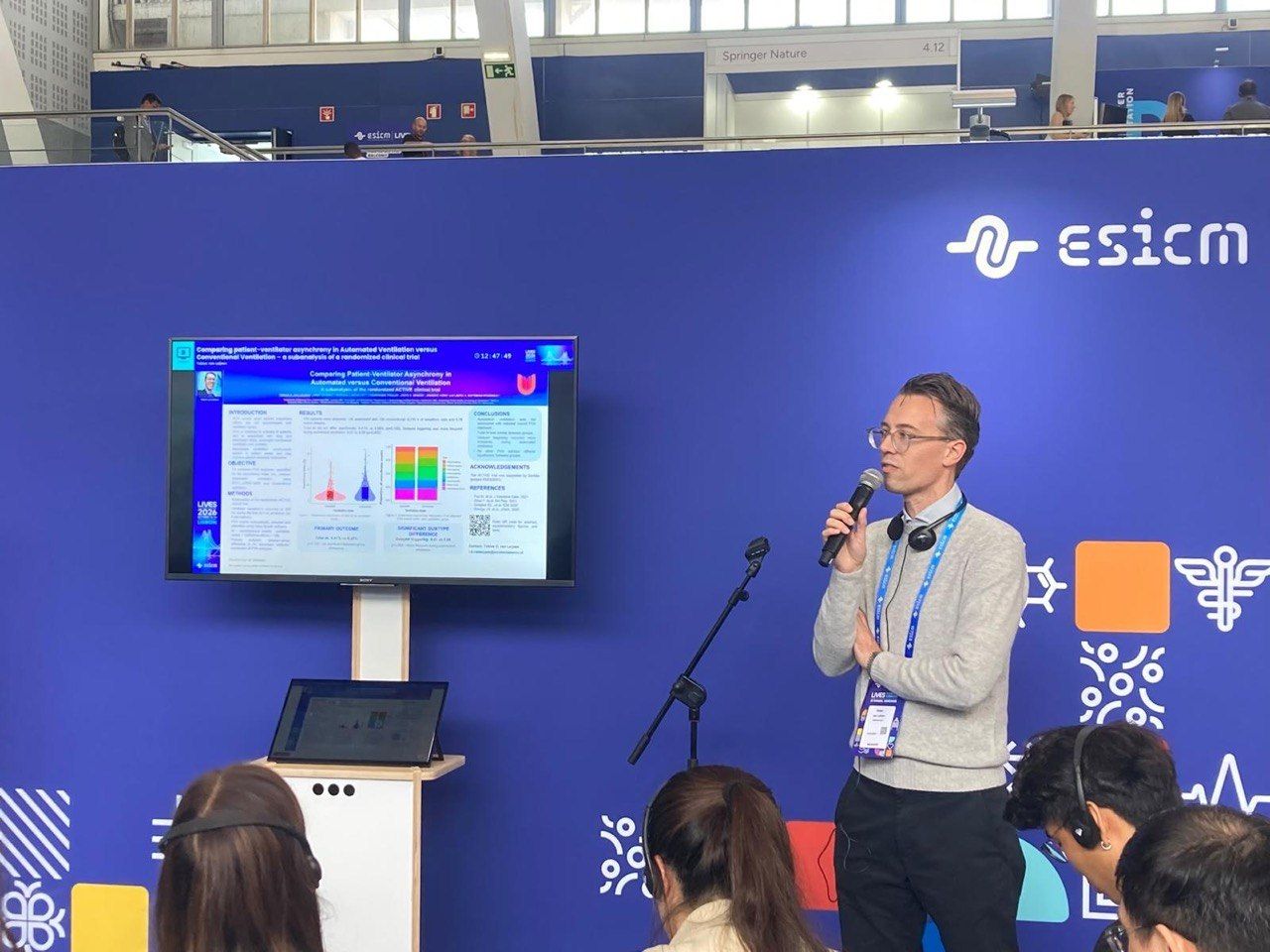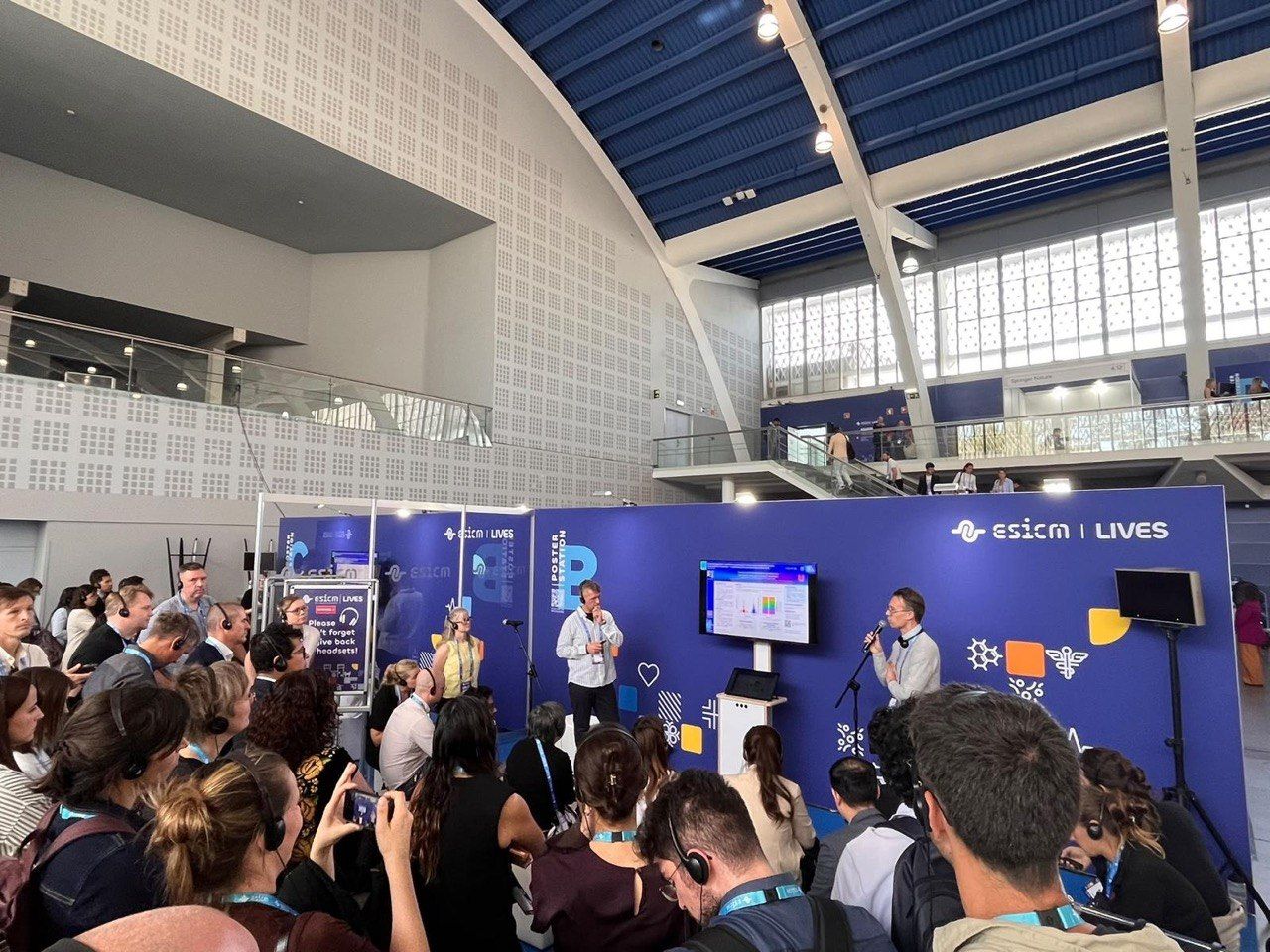
At ESICM LIVES 2026 in Lisbon, independent investigators presented a subanalysis of the ACTiVE randomised trial: patient–ventilator asynchrony (PVA) during automated closed-loop ventilation versus conventional ventilation. The talk was given at Poster Station B in the Acute Respiratory Failure 5 session. Tobias van Leijsen (Amsterdam) presented.
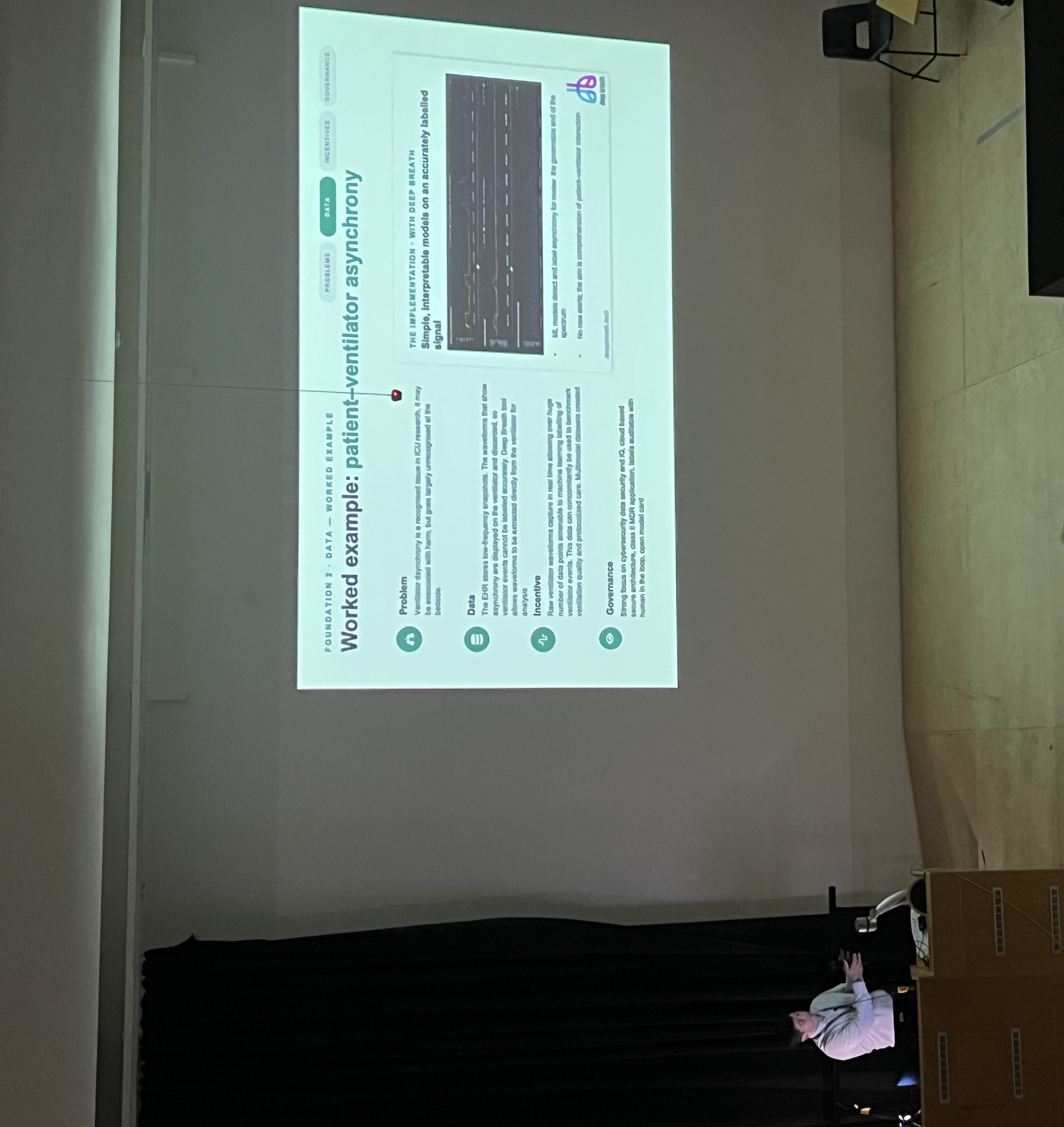
The official abstract names Deep Breath (Rotterdam, the Netherlands) as the software used to detect and classify PVAs automatically from breath-by-breath ventilator waveforms recorded at 200 Hz. The Deep Breath team is grateful to the researchers for trusting our platform with randomised-trial data, and for discussing it with the European intensive-care community.
What was analysed
- Subanalysis of ACTiVE — INTELLiVENT-ASV versus conventional ventilation
- 276 patients (144 automated, 132 conventional)
- 6,730 hours of recording and 6.78 million breaths in the first 24 hours of ventilation (at least six hours per patient)
- Asynchrony index (AI) and PVA subtypes classified with Deep Breath
What the investigators reported
Overall AI was not significantly different between automated and conventional ventilation (median 6.41% vs 8.55%, p = 0.155). Delayed triggering occurred more often with automated ventilation. Other PVA subtypes did not differ significantly.
Authors
Tobias van Leijsen, Jimmy Schenk, Marcus Schultz, Jante Sinnige, Janneke Horn, Frederique Paulus, and Laura A. Buiteman-Kruizinga.
Programme listing: ESICM LIVES 2026, Acute Respiratory Failure 5.
If you are running a ventilation or PVA study and need high-resolution waveforms with labelled asynchronies, contact us.