1. Low-frequency snapshots
Periodic charting misses rapid changes at the bedside.
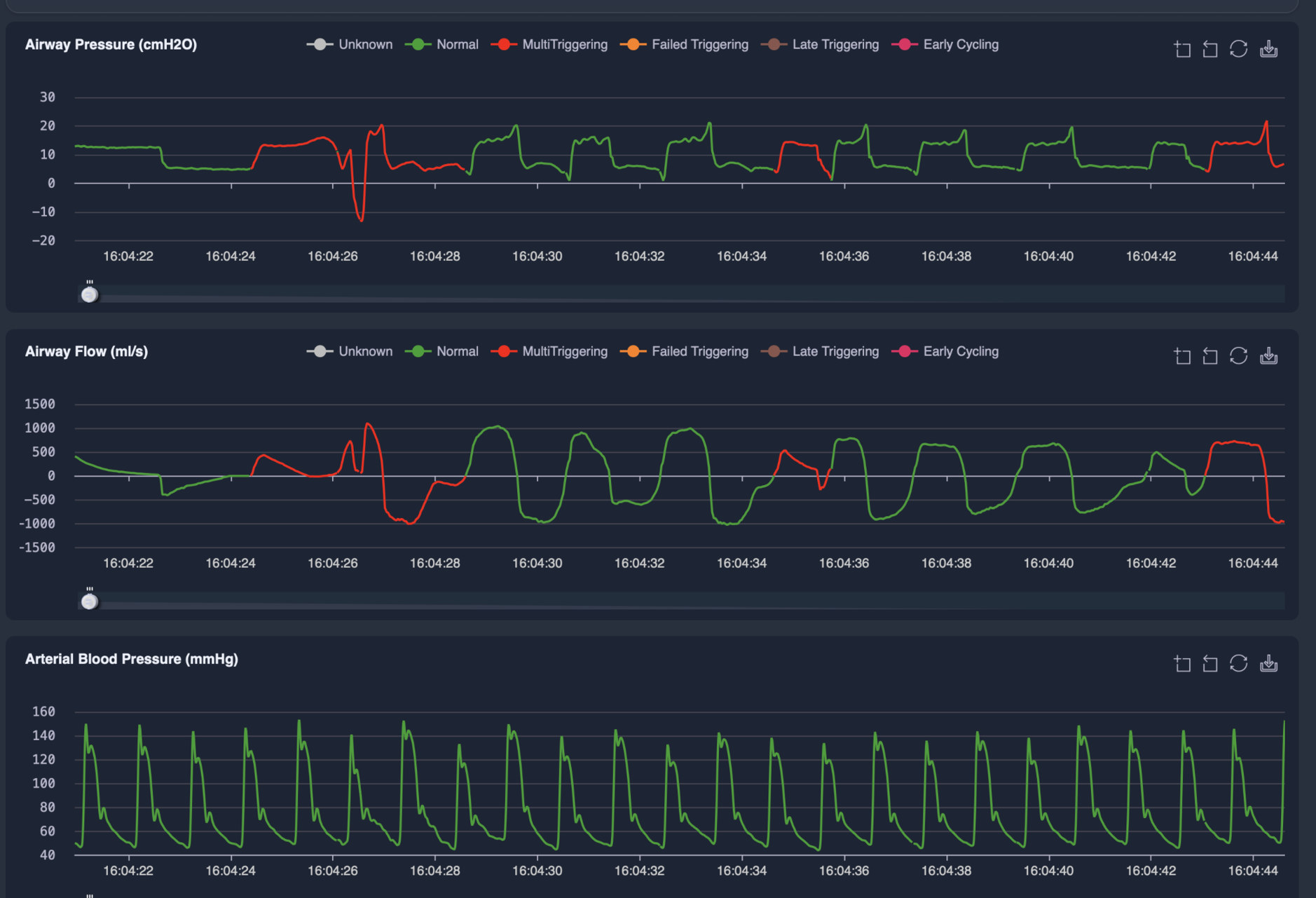
1. Continuous high-resolution visualisation
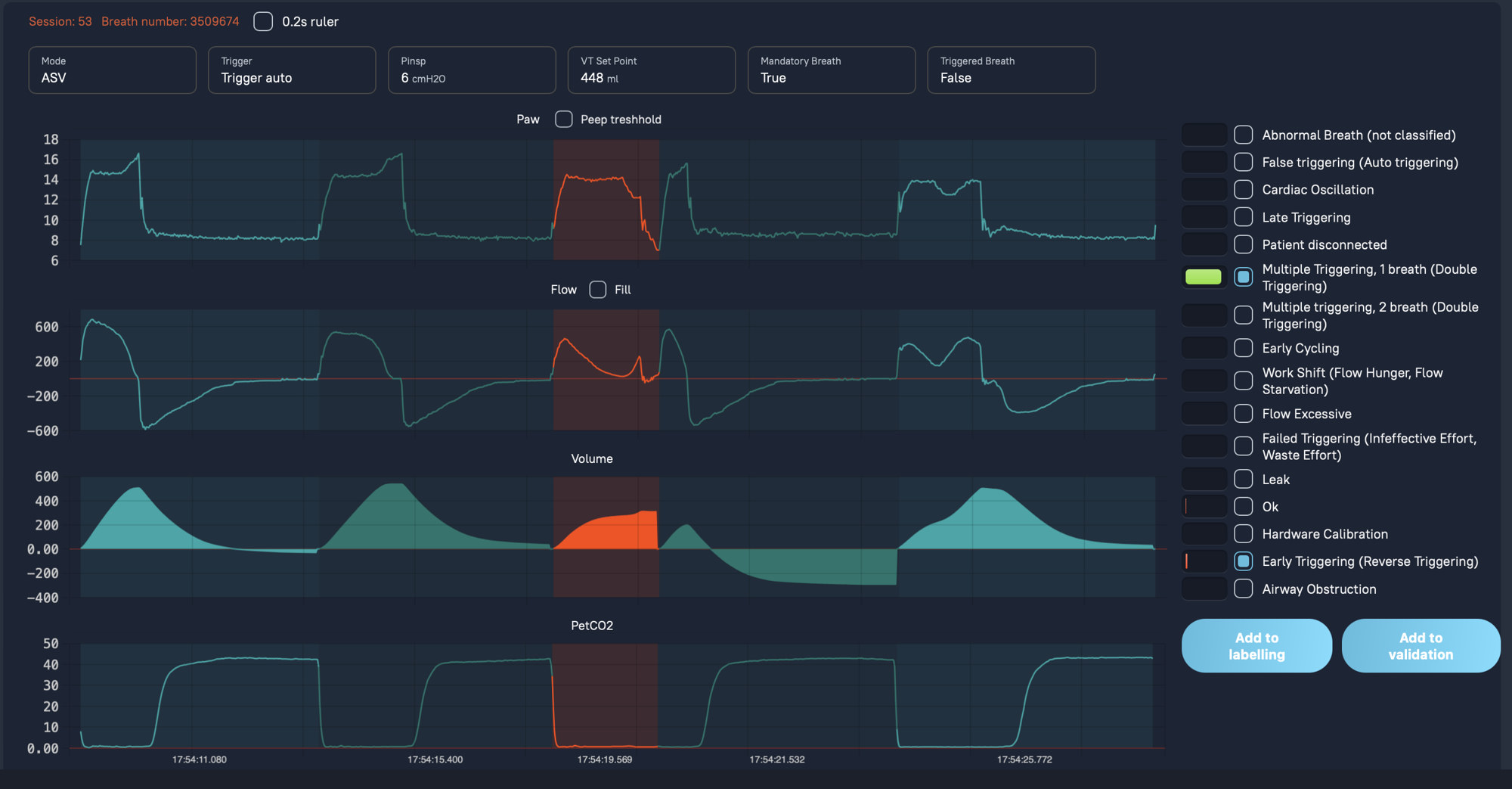
See rapid bedside changes breath by breath.
 deep breath
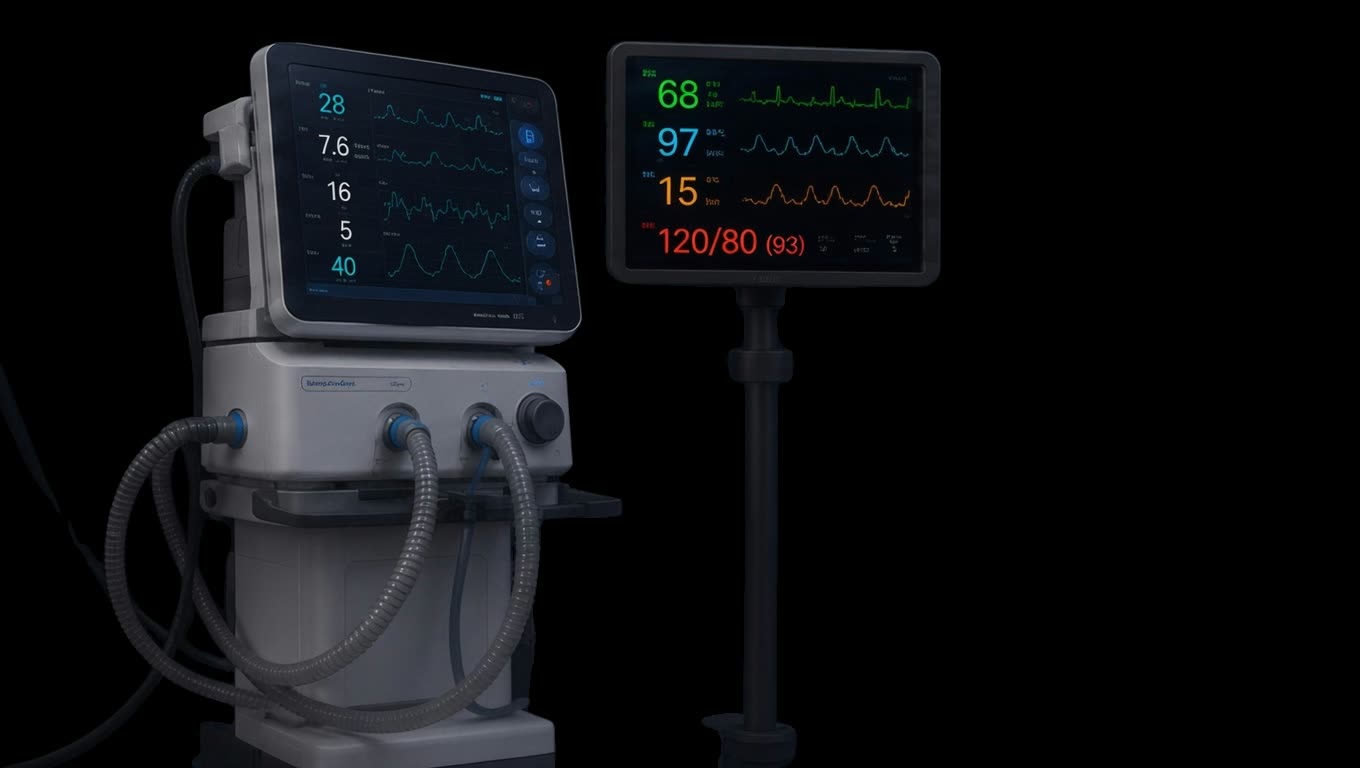
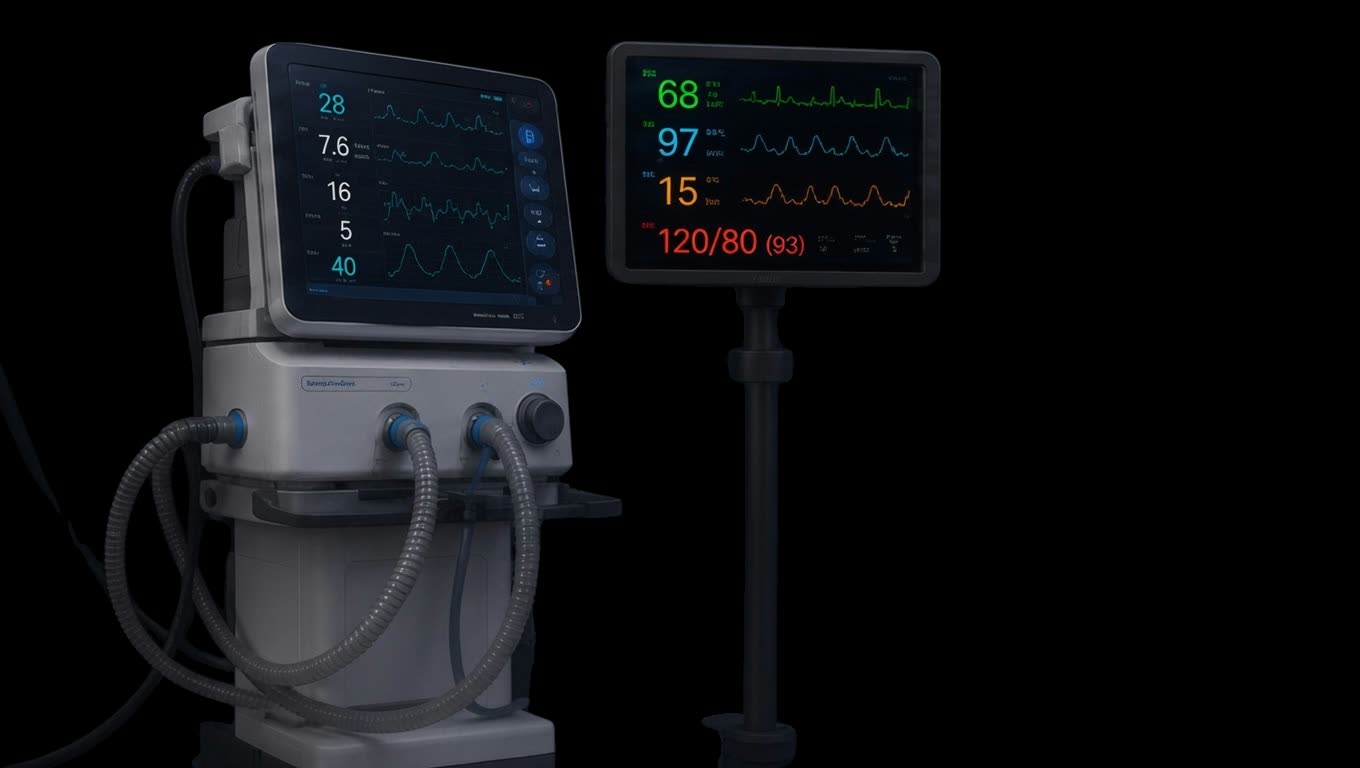
Turn high-resolution medical device data into structured insight for quality management, AI model monitoring and clinical innovation.
02 | The data gap
EHRs are essential for documentation and outcomes, but they weren’t built to capture the full richness of bedside physiological data needed for modern ICU research, protocol analytics, and advanced monitoring.
03 | Built differently
Deep Breath collects data directly from source devices, preserves waveform fidelity, synchronises signals continuously, and turns bedside signals into structured insight for research, quality management, and advanced analytics.
Periodic charting misses rapid changes at the bedside.
See rapid bedside changes breath by breath.
Scattered across systems, formats, and departments.
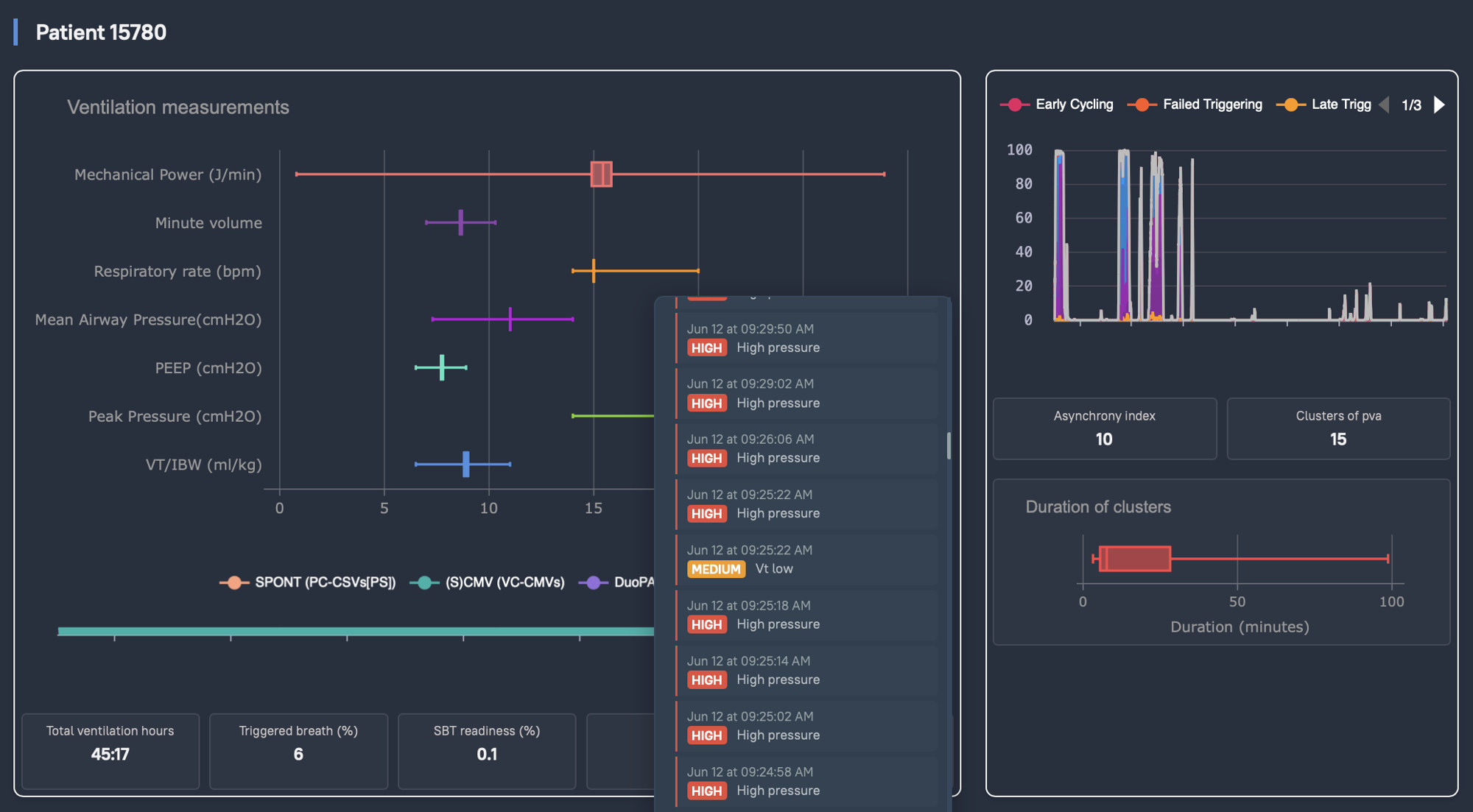
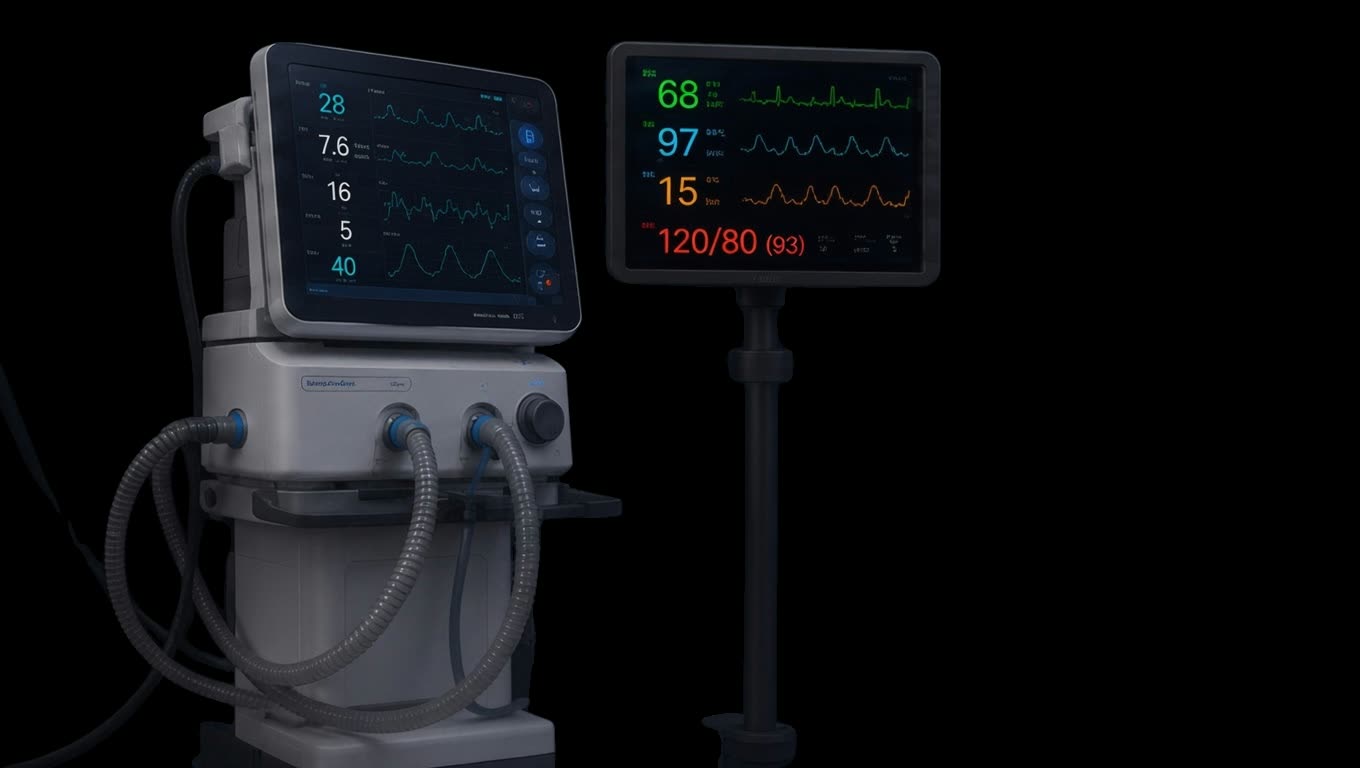
Bring ventilators, monitors, and physiological signals into one view.
Waveforms are often missing, downsampled, or not stored at all.
Preserve rich physiological dynamics for review and research.
Human workflow introduces delay and inconsistency.
Reduce manual entry and align signals across devices.
Hard to build reliable models, detect patterns, or evaluate protocols with limited data.
Support protocol analytics, AI validation, and dataset creation.
04 | Direct device data collection
Deep Breath collects multimodal high-resolution data directly from ventilators and bedside devices, then turns it into structured, analysable information for multiple hospital use cases.
Structured. Synchronised. Analysable.
05 | Trustworthy AI: monitoring drift and bias
Deep Breath supports not only AI development, but also the ongoing monitoring needed to maintain trust in real-world clinical environments. As devices, workflows, patient populations, and protocols change, models can drift or behave unevenly across contexts.
Drift · Bias · Real-world trust
Book a walkthrough of AI monitoring, alarm analytics, and quality management — or tell us about your research protocol and multicentre setup. Details on collection and PVI analysis.
Follow us
Contact us